When most travelers think of Agra, the Taj Mahal dominates their itinerary. But just a few kilometers away lies another masterpiece that tells a different story—one of power, personal choice, and architectural innovation. Emperor Akbar, the third Mughal ruler, didn't wait for his death to plan his final resting place. He chose it himself.
The tomb sits in Sikandra, a suburb of Agra district in Uttar Pradesh, India. Completed around 1613 by his son, Emperor Jahangir, this site isn't just a grave; it's a sprawling garden complex that redefined Mughal architecture. Here’s why it deserves your attention beyond the marble mausoleum on the Yamuna river.
A King’s Personal Choice
Here’s the thing about Akbar’s tomb: it breaks the mold. Unlike later Mughal tombs, which are often centered around a single, towering dome, Akbar wanted something grounded. He selected the site during his lifetime, opting for a vast, walled garden in the traditional Charbagh style—a four-part garden divided by walkways and water channels.
The structure itself is striking because of what it *isn’t*. There’s no massive central dome. Instead, you get a multi-tiered pyramid-like structure made primarily of red sandstone, topped with an open marble pavilion. It feels less like a monument to heaven and more like a statement of earthly grandeur. The actual burial chamber is underground, while a symbolic cenotaph rests above—a common Mughal tradition, but executed here with unique geometric precision.
Architecture That Speaks Volumes
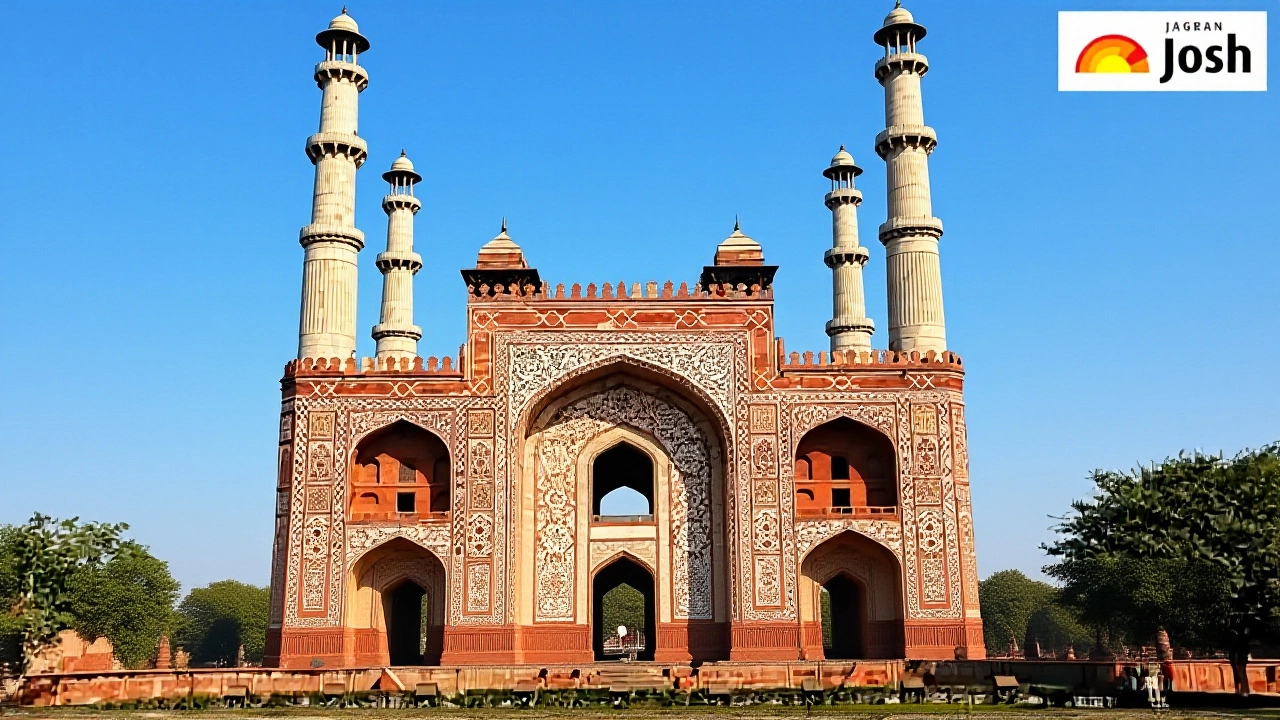
Walking through the main southern gate, you’re greeted by intricate carvings. The entrance features delicate marble inlay work, floral motifs, and inscriptions from the Quran. This blend of Islamic artistry with local Indian craftsmanship is the hallmark of the Indo-Islamic style that flourished under Akbar’s reign (1556–1605).
The use of red sandstone gives the tomb a warm, earthy tone that contrasts sharply with the white marble of the Taj Mahal. As you move deeper into the complex, the symmetry is hypnotic. Trees, lawns, and water channels create a sense of order and peace. It’s easy to see why historians consider this one of the finest examples of early Mughal architecture. The lack of a dome wasn’t an oversight; it was a deliberate design choice that influenced subsequent structures, including Humayun’s Tomb in Delhi.
Preservation and Management
Today, the site is protected by the Archaeological Survey of India (ASI), a central government organization under the Ministry of Culture. The ASI handles everything from structural repairs to garden maintenance and ticket management. While local civil administration manages traffic and security outside the walls, the ASI ensures the historical integrity of the monument remains intact.
Historically, the tomb suffered damage during the decline of the Mughal Empire in the 18th century. Regional powers clashed, and parts of the interior decoration were looted or damaged. British administrators later initiated some restoration efforts, but it was after India’s independence in 1947 that systematic conservation began. Now, it stands as a testament to centuries of care—and neglect—by various rulers.

Why It Matters Today
For tourists, Akbar’s Tomb offers a quieter, more reflective experience compared to the crowds at the Taj Mahal. It’s part of the essential Agra circuit, alongside Agra Fort and Fatehpur Sikri. Entry fees vary for Indian citizens, foreign nationals, and children, with hours generally running from sunrise to sunset. Specific rates can change, so checking official notices is wise before visiting.
Beyond tourism, the site holds cultural significance. It reminds us of a time when a powerful emperor sought harmony between nature and architecture. The Charbagh layout symbolizes paradise gardens described in Persian poetry, making the tomb not just a memorial, but a spiritual journey. For students of history and architecture, it’s a classroom without walls.
Frequently Asked Questions
Where exactly is Akbar's Tomb located?
Akbar's Tomb is situated in Sikandra, a suburb of Agra city in the Agra district of Uttar Pradesh, India. It is approximately 10 kilometers from the Taj Mahal, making it easily accessible for visitors exploring the region.
Who built Akbar's Tomb and when was it completed?
Construction began during Akbar’s lifetime, but he died in 1605 before it was finished. His son, Emperor Jahangir, completed the project around 1613. The design reflects Akbar’s own preferences for a garden-tomb rather than a domed mausoleum.
Is Akbar's Tomb open to tourists?
Yes, it is open to the public daily from sunrise to sunset. Separate entry fees apply for Indian nationals and foreign tourists. The site is well-maintained by the Archaeological Survey of India, with facilities for visitors including guided tours and informational boards.
What makes the architecture of Akbar's Tomb unique?
Unlike later Mughal tombs, Akbar's Tomb lacks a large central dome. Instead, it features a multi-tiered structure made of red sandstone and white marble, topped with an open pavilion. It is set within a vast Charbagh-style garden, emphasizing symmetry and natural beauty over vertical height.
Has the tomb been damaged historically?
Yes, the tomb suffered damage during the 18th century when the Mughal Empire weakened and regional conflicts increased. Some interior decorations were looted. Restoration efforts were undertaken by British administrators and later by the independent Indian government through the ASI.