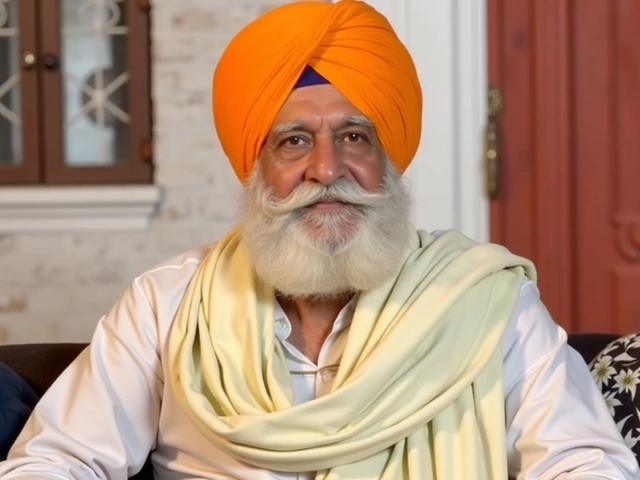
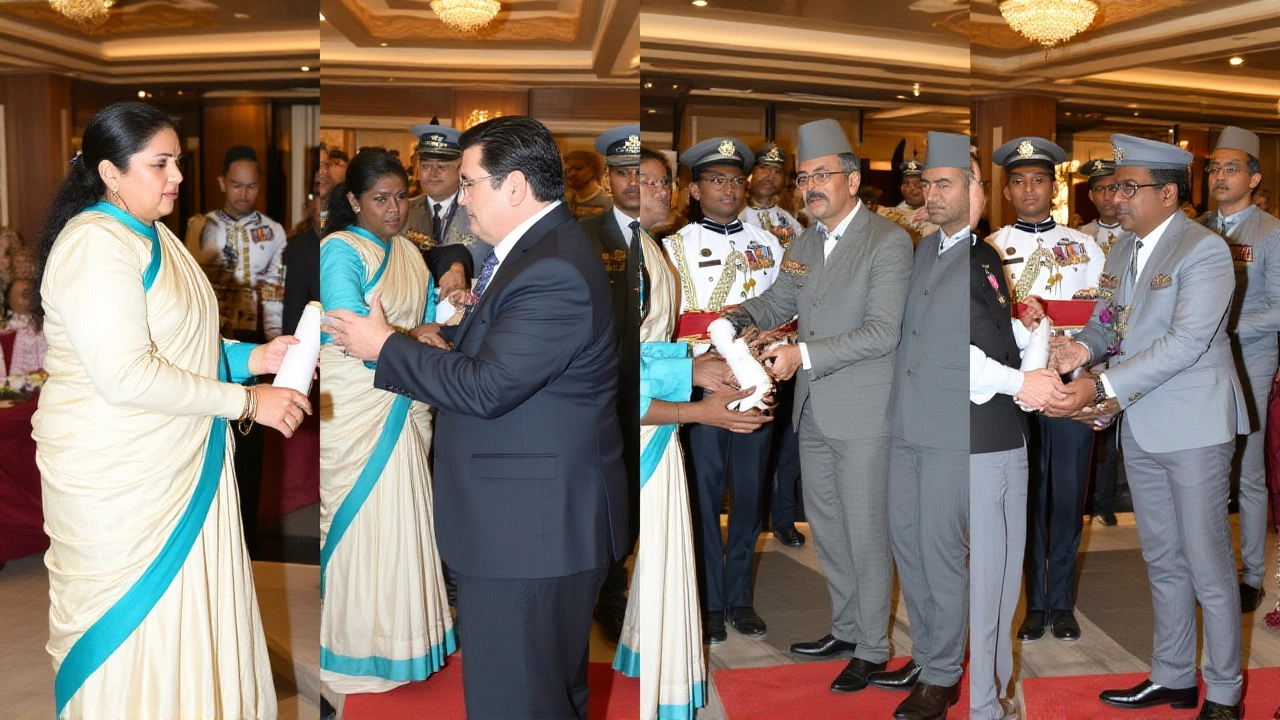
When Bharat Singh Bharti, a veteran folk artist from Bihar, walked into the presidential palace on Monday, he wasn't just receiving an award. He was carrying the weight of seven decades of devotion to All India Radio Patna and the soul of Bhojpuri culture. The Indian government honored him with the Padma Shri, one of the country's highest civilian awards, in a ceremony that felt less like politics and more like a homecoming for millions of fans.
The event took place at Rashtrapati Bhavan, New Delhi, where dignitaries gathered to recognize artists who have shaped the nation's cultural fabric. But while the capital celebrated, the real emotion rippled through the dusty lanes of Nanour village in the Sahar region of Bhojpur district. There, families huddled around televisions, eyes wet with pride as they watched their local hero receive national acclaim.
A Seven-Decade Journey Through Folk Music
Here’s the thing about Bharti: he didn’t start out trying to become a legend. He started singing because it was how his community spoke. For nearly 70 years, he has been the guardian of Bhojpuri folk traditions, preserving songs that might otherwise have faded into silence. According to reports from The Wire Hindi, his dedication spans almost seven decades—a timeline that places his early work in the mid-1950s, long before digital archives or streaming platforms existed.
His professional journey truly took shape in 1962 when he joined All India Radio Patna. At a time when radio was the primary source of entertainment for rural India, Bharti’s voice became a daily companion to farmers, laborers, and housewives across eastern India. His recordings weren’t just songs; they were stories of love, loss, harvest festivals, and social struggles, delivered in a dialect that resonated deeply with listeners.
One notable collaboration highlights his artistic depth: the song “Batav Chan Keker Se Mile,” written by lyricist Vishwanath Shaida. This track exemplifies the poetic simplicity and emotional richness that define Bharti’s repertoire. It’s not flashy pop music—it’s raw, authentic expression rooted in lived experience.
Why This Matters Beyond the Award
Turns out, this isn’t just about one man getting recognition. It’s about validating an entire cultural ecosystem. Bhojpuri music has often been dismissed as “regional” or “folk,” but Bharti’s career proves its sophistication and universal appeal. By bringing these traditions to national attention, he helped elevate Bhojpuri from a local dialect to a recognized linguistic and musical identity.
“He brought Bhojpuri to the world stage,” reads the description of a YouTube video featuring his old hits. That statement carries weight. In an era dominated by Bollywood soundtracks and global pop, Bharti ensured that the rhythms of the fields and the lullabies of grandmothers remained alive. His work preserved the “pure tradition” of Eastern vocal styles, creating a grammar for folk singing that younger artists still follow today.
Celebrations in Nanour Village
While New Delhi hosted the formal ceremony, the heart of the celebration beat in Nanour. Residents described a wave of joy sweeping through the village. Elders smiled knowingly, remembering listening to Bharti’s songs on crackling radios decades ago. Younger generations, perhaps hearing his name for the first time in such a prestigious context, asked questions about his legacy.
Family members were visibly moved. One relative shared, “We always knew he was special, but seeing him honored at Rashtrapati Bhavan… it feels like our whole village is being recognized.” Such moments underscore how personal achievement can reflect collective pride. When Bharti sang, he gave voice to countless unnamed voices in rural Bihar.
The Ripple Effect on Regional Arts
This award sends a clear message: regional art forms matter. With increasing commercialization threatening traditional practices, honors like the Padma Shri serve as anchors. They remind institutions and audiences alike that preservation requires active support—not just nostalgia.
Experts note that Bharti’s influence extends beyond performance. He mentored younger singers, documented oral histories, and advocated for fair compensation for folk artists. His lifetime contribution includes defining structural elements of “Purbi Gayan” (Eastern singing style), ensuring consistency and authenticity in performances across generations.
What’s Next for Bhojpuri Culture?
Looking ahead, there’s hope that Bharti’s recognition will inspire greater investment in regional arts education. Schools in Bihar could incorporate folk music into curricula. Digital platforms might prioritize archiving older recordings. And perhaps most importantly, new generations may feel empowered to embrace their roots without shame.
As for Bharti himself? He remains humble. After decades of service, he likely sees this honor not as an endpoint, but as validation of a life well spent. Whether performing live or simply sharing stories with grandchildren, he continues to embody the spirit of Bhojpuri resilience.
Frequently Asked Questions
Who is Bharat Singh Bharti?
Bharat Singh Bharti is a renowned Bhojpuri folk singer and cultural icon from Bihar, India. Born in Nanour village in Bhojpur district, he began his career in the 1950s and joined All India Radio Patna in 1962. Over seven decades, he has preserved and popularized Bhojpuri folk music, earning widespread respect for his contributions to regional culture.
What is the Padma Shri award?
The Padma Shri is the fourth-highest civilian award in India, conferred by the Government of India for distinguished contributions in various fields including arts, literature, science, sports, and public service. It recognizes individuals who have made significant impacts in their respective domains over sustained periods.
Where did Bharat Singh Bharti receive the award?
He received the Padma Shri during a formal ceremony held at Rashtrapati Bhavan (Presidential Palace) in New Delhi on Monday. The event brings together recipients from diverse backgrounds to be personally honored by the President of India, symbolizing national appreciation for their achievements.
How long has Bharat Singh Bharti been active in music?
Bharti has been actively involved in Bhojpuri folk music for approximately 70 years. His professional association with All India Radio Patna dates back to 1962, though his informal engagement with folk traditions likely began earlier. His enduring presence has made him a living archive of Bhojpuri musical heritage.
Why is this award significant for Bhojpuri culture?
This award validates Bhojpuri folk music as a vital component of India’s cultural diversity. Historically marginalized compared to mainstream cinema or classical music, Bhojpuri traditions now gain institutional recognition. Bharti’s success encourages preservation efforts, supports emerging artists, and fosters pride among communities whose languages and customs are often overlooked.
Did anyone else collaborate with Bharat Singh Bharti?
Yes, notably lyricist Vishwanath Shaida co-created several iconic songs with Bharti, including “Batav Chan Keker Se Mile.” Their partnership combined poetic storytelling with melodic delivery, producing works that remain beloved classics. These collaborations highlight the collaborative nature of folk art, where composers, singers, and poets collectively sustain cultural narratives.